Emerald AI, Google and NVIDIA announced the AI Energy Management Alliance (AEMA) on September 16, 2026, bringing renewed attention to how data centers interact with the electricity grid. The initiative promotes facilities that can adjust their power demand as grid conditions change, with the aim of supporting AI infrastructure expansion while protecting electricity reliability and affordability in the United States. Its significance lies in making the timing and controllability of electricity demand part of the conversation about AI growth.
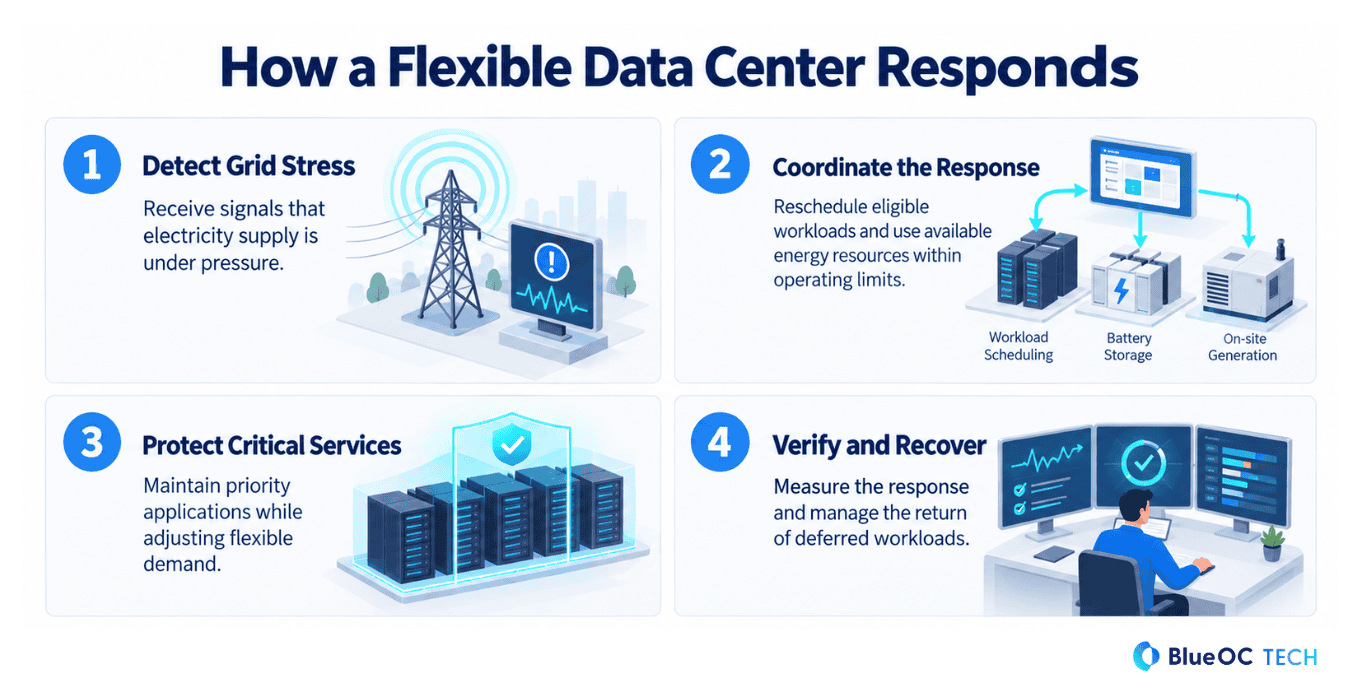
AEMA describes several ways to provide that flexibility, including adjusting computing workloads, using energy storage and drawing on generation located alongside a facility. These approaches can reduce the electricity a data center draws from the grid during periods of stress while protecting critical computing services. The alliance advocates policies that recognise this capability when considering new grid connections, positioning flexible demand as a potential resource for the power system.

How Data Center Flexibility Works
The distinction between consuming less electricity and changing when it is consumed is important. Moving a computing job to another time may relieve pressure during a peak without reducing the total energy required to complete it. For a data center operator, the practical question becomes how much demand can be adjusted, for how long and at what cost to service delivery. That makes flexibility a matter of workload priorities, operating limits and coordination between computing and energy systems.
The alliance’s announced principles emphasise measurable performance, including response speed, duration and predictable behaviour during emergencies. They also call for clearer technical requirements and operational data sharing. These priorities suggest that a commitment to flexibility will need to be supported by evidence of how a facility responds under defined conditions.
Connecting Grid Signals to Computing Decisions
From BlueOC’s perspective, this creates an important software and integration challenge. Consider a hypothetical facility running b oth a customer-facing application and a batch analytics job. An instruction to reduce grid consumption would need to account for their different service requirements, the availability of backup resources and the consequences of delaying work. Implementing that response would require reliable signals, explicit decision rules and a record of what changed. A dashboard showing electricity use would provide visibility, but the operational value would depend on the systems and responsibilities connected to it.
For technology and energy teams, a useful starting point is therefore to identify which workloads can tolerate adjustment and how those adjustments would be verified. Measures could include the power reduction delivered, response time, missed computing deadlines and the effect when deferred work resumes. Examining these outcomes together would help prevent an apparent improvement in grid responsiveness from concealing a service problem elsewhere.
What to Watch as the Alliance Develops
AEMA’s launch establishes a shared agenda; its announcement does not by itself demonstrate faster connections or lower electricity bills. Those outcomes will depend on implementation, local grid conditions and the arrangements between facilities and electricity providers. For businesses following the development, the relevant next step is to watch for deployment evidence showing that flexibility can be delivered repeatedly while meeting both computing commitments and power-system requirements.